One objection to overcome when selling sustainability initiatives to decision makers is the notion that customers don’t want it. This observation is directly tied to the idea, and perhaps even evidence, that it’s not a purchasing criterion. I would argue that there’s still a significant opportunity to drive loyalty and advocacy with sustainability.
First, a quick primer on the concept of a customer journey map. Basically, it’s looking at the stages your customer goes through from awareness to consideration which lead to a purchase decision. Then there’s the experience of your product or service and finally loyalty, which keeps bringing customers back, and, even better, advocacy, where customers become fans and tell others about you.
Sustainability may not be part of the consideration phase (although it can be, which we’ll address in an upcoming blog), but it certainly can drive customers to become fans and ambassadors for your brand. If you are not yet leveraging sustainability efforts to generate advocacy, then this blog is for you!
Let’s look at this from a “captive audience” perspective in the events, travel, sports, and entertainment world. In the physical space, customers are often at the mercy of whatever is available and true that sustainability factors less in the decision to purchase. In other words, you are not going to miss out seeing your favorite team in the playoffs because the stadium doesn’t have renewable energy. Food sustainability is not likely to be the reason one selects a particular movie theater. Nor is a waste management plan a decision criteria to attend a convention or concert.
Imagine how powerful sustainability efforts can be in creating a virtuous circle of customer advocacy when you can use those moments the audience is “captive” (watching a stage while they wait for an artist, sitting on the plane waiting to disembark, waiting in line for beer between innings at a baseball game, etc.). This moment can be especially poignant if you can feature efforts to promote and support biodiversity (pictures of animals and colorful food are always crowd pleasers!).

I recently spoke with Vivian Belzaguy, Founder of Ascendance, a sustainable events firm based in Miami. Vivian has worked with music festivals and had great success implementing sustainability initiatives and engaging attendees. (Be sure to get the Ascendance Sustainable Event Guide at https://www.greenyourevent.com/)
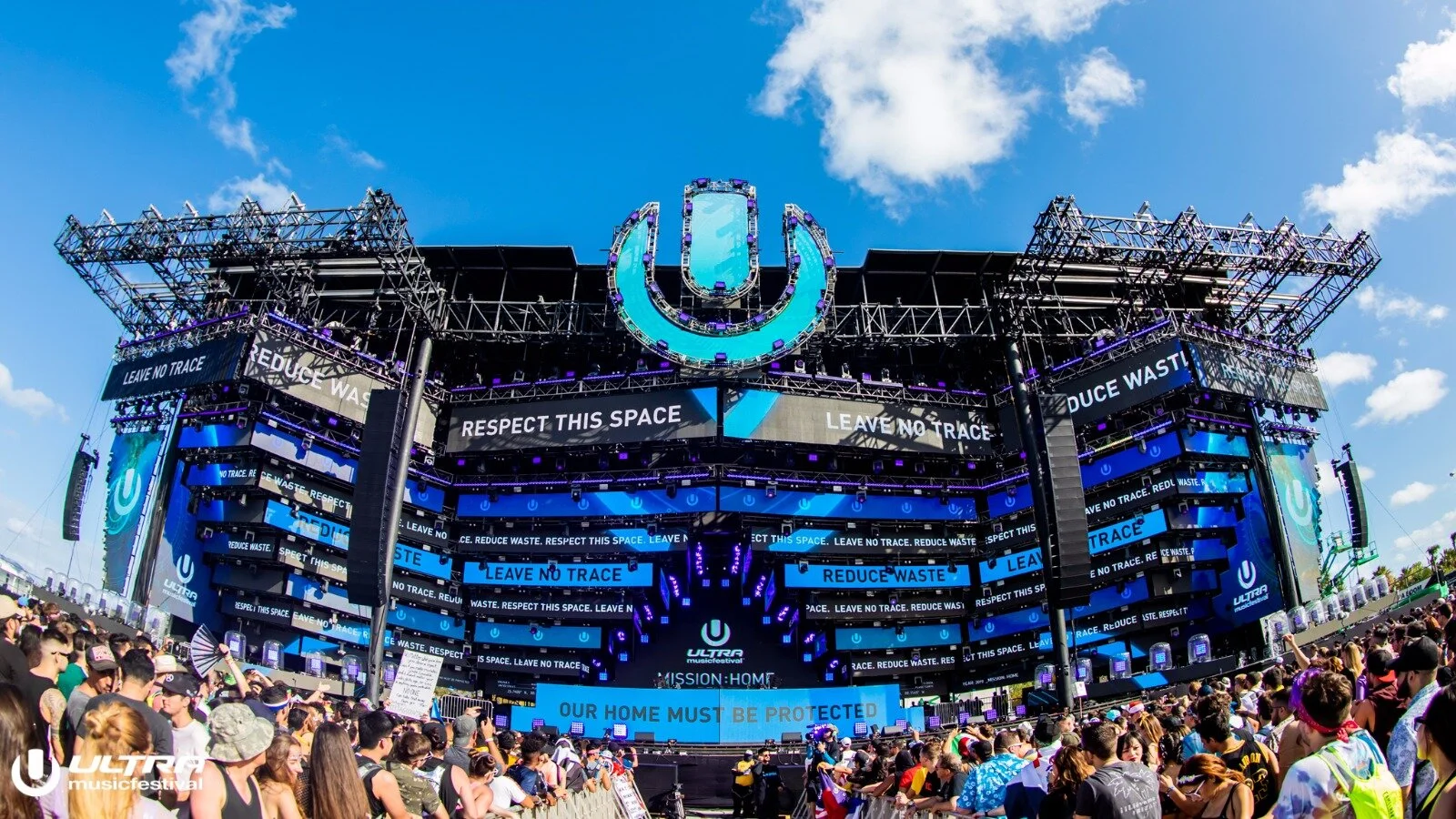
If you are holding an event (sporting, music, wedding, whatever), consider and plan for how you will interact with and protect the natural habitat. Think about how to engage your guests in a way that educates them and helps them see the value of participating in your program. Vivian worked on Ultra Music Festival’s “Mission: Home” sustainability program and signage (both physical throughout the property and digital from the stage) was helpful but she stressed the importance of a fully holistic approach to sustainability and advanced (pre-show) communication.
When speaking about how attendees were invited to be part of a culture of care, Vivian explained, “what excites me is when a festival is looking not only to do a few little things here and there and put a little green stamp on their festival, but to really incorporate it into the brand…we did a full campaign that was in line with the brand. It really put a cool and inviting spin on the whole element of sustainability …and really created a lot of engagement and talk in advance of the festival.” (Be sure to watch the full interview with Vivian for more great takeaways!)
Watch the full interview with Vivian
“The interconnectedness of nature’s seemingly independent elements is a delicate system to keep in balance. Plants and animals depend on each other as well as clean water, air and soil in complex ways… so, we really have a responsibility to protect it all.” — Vivian Belzaguy, Founder Ascendance Sustainable Events
Think about all the travel, sport, and entertainment experiences that impact the natural environment – golf tournaments, marathons, water sports such as rowing, sailing, surfing, and all the other outdoor sports, tourism, and entertainment activities we so enjoy. Sure we enjoy the landscape and the natural surroundings but we don’t often think about the fish breeding patterns we may be interrupting, or the natural habitat we have thrown out of balance with the plastic, sunscreen, and other pollutants.
Vivian’s wish list was that more festivals have apps that would enable push notifications. This would be especially helpful in all of the scenarios I listed above where an app, with a dynamic map that can be changed quickly, can notify participants and attendees of potential vulnerable spots or natural activity that should be protected, such as nests, feeding patterns and times, and areas where endangered or at-risk species are present. We discussed using data and technology to better understand attendee behavior and then flow people through a space in a way that protects the habitat and has additional sustainability benefits.